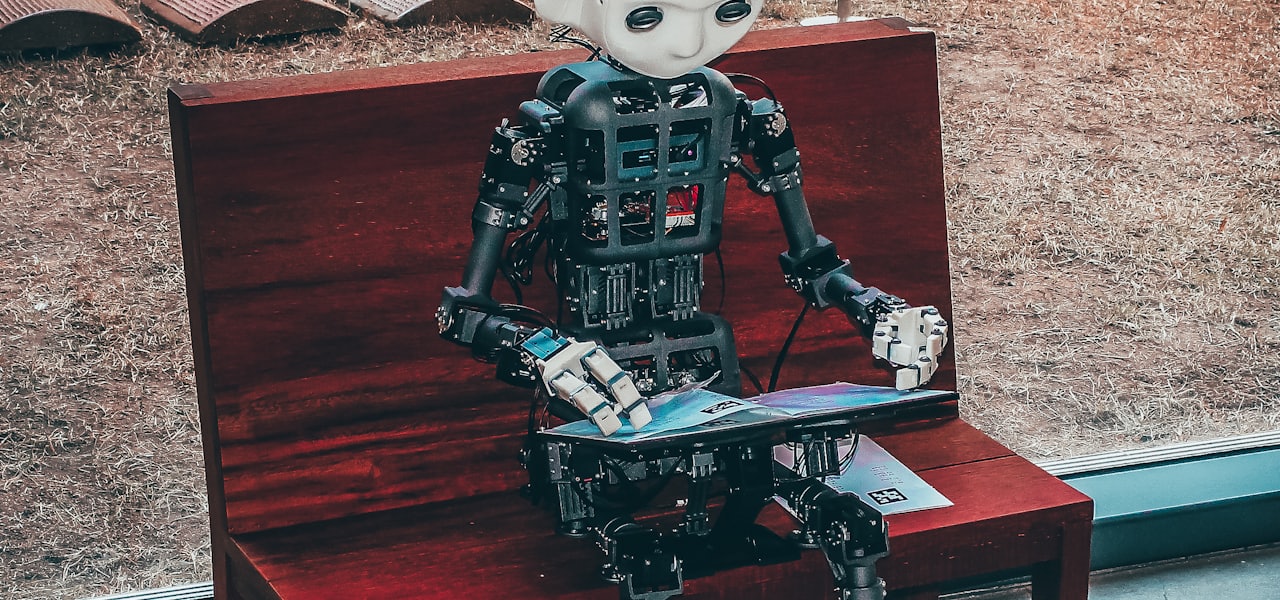
Education by algorithm refers to automated solutions that algorithmic agents or social bots offer to education, to assist with mundane educational tasks. These are often instrumentalist “educational reforms” or “curriculum transformations”, which have been implemented by policy makers and are supported by proprietary education technologies. New educational policies, mandated by transnational governance forums (like the OECD), have manufactured a connection between economies and education. Governments, schools and universities are expected to introduce or prepare students for an “unknown future”, to “future proof” them against an identified issue or to mitigate a national crisis. Technologies are seen as a catalyst to effect these changes. However, these policies mask a deeper problem, which include the assetization of education and the use of technologies as a means for surveillance and behavior modification. The traces that students and leave, through cookies, logins learning activities, assignments and tests, are collected, facetted, and shared with commercial organizations by these agents, to both predict future behavior and shape it. Techno solutionist thinking has led to managers adopting educational policies and reforms, and looking towards technologies to act as disrupters, liberators or agents to improve efficiency. During the COVID-19 pandemic, many more students had to modify their learning and working circumstances to protect themselves. Academics shifted their assessment practices from the dominant assessment of learning paradigm to an orientation that saw value in "assessment for learning". Big tech assisted, and teaching infrastructure became further privatized, and unbundling of education provision went a step further. Following the return to class, this assessment paradigm became rationalised in education. Leaving the space for algorithmic agents to step in. Academics work was increasingly driven by learning experience platforms and student understanding was extended through interleaving, behavior modification nudges and rewards and scheduled high stakes assessments. This data collection may also be construed as surveillance., or perceived as evidence of a Fourth Industrial Revolution
Symbol level
In knowledge-based systems, agents choose actions based on the principle of rationality to move closer to a desired goal. The agent is able to make decisions based on knowledge it has about the world (see knowledge level). But for the agent to actually change its state, it must use whatever means it has available. This level of description for the agent's behavior is the symbol level. The term was coined by Allen Newell in 1982. For example, in a computer program, the knowledge level consists of the information contained in its data structures that it uses to perform certain actions. The symbol level consists of the program's algorithms, the data structures themselves, and so on.
Outline of automation
The following outline is provided as an overview of and topical guide to automation: Automation – use of control systems and information technologies to reduce the need for human work in the production of goods and services. In the scope of industrialization, automation is a step beyond mechanization. == Essence of automation == Control system – a device, or set of devices to manage, command, direct or regulate the behavior of other devices or systems. Industrial control system (ICS) – encompasses several types of control systems used in industrial production, including supervisory control and data acquisition (SCADA) systems, distributed control systems (DCS), and other smaller control system configurations such as skid-mounted programmable logic controllers (PLC) often found in industrial sectors and critical infrastructures. Industrialization – period of social and economic change that transforms a human group from an agrarian society into an industrial one. Numerical control (NC) – refers to the automation of machine tools that are operated by abstractly programmed commands encoded on a storage medium, as opposed to controlled manually via handwheels or levers, or mechanically automated via cams alone. Robotics – the branch of technology that deals with the design, construction, operation, structural disposition, manufacture and application of robots and computer systems for their control, sensory feedback, and information processing. == Branches of automation == === General purpose === Autonomous automation – autonomous software agents to adapt the controllers of computer controlled industrial machinery and processes Banking automation Broadcast automation Building automation – advanced functionality provided by the control system of a building. A building automation system (BAS) is an example of a distributed control system. Home automation – control system of a home. Office automation – the varied computer machinery and software used to digitally create, collect, store, manipulate, and relay office information needed for accomplishing basic tasks such as business process automation and robotic process automation. Console automation Database automation Integrated library system Laboratory automation === Specific purpose === Automated attendant Automated guided vehicle Autonomous mobile robot Automated highway system Automated pool cleaner Automated teller machine Automatic painting (robotic) Pop music automation Remotely operated vehicle Robotic lawn mower Telephone switchboard Vending machine == Fields contributing to automation == Cybernetics – the interdisciplinary study of the structure of regulatory systems. Cognitive science – interdisciplinary scientific study of the mind and its processes. It examines what cognition is, what it does and how it works. Robotics – the branch of technology that deals with the design, construction, operation, structural disposition, manufacture and application of robots and computer systems for their control, sensory feedback, and information processing. == History of automation == History of mass production – Prerequisites of mass production were interchangeable parts, machine tools and power, especially in the form of electricity. Mass production was popularized in the 1910s and 1920s by Henry Ford's Ford Motor Company, which introduced electric motors to the then-well-known technique of chain or sequential production. History of home automation == Automated machines == Machine to Machine OLE for process control (OPC) Process control – a statistics and engineering discipline that deals with architectures, mechanisms and algorithms for maintaining the output of a specific process within a desired range. Run Book Automation (RBA) Robot – a mechanical or virtual intelligent agent that can perform tasks automatically or with guidance, typically by remote control. == Automated machine components == Artificial intelligence – the intelligence of machines and the branch of computer science that aims to create it. Friendly artificial intelligence – an artificial intelligence that has a positive rather than negative effect on humanity, and the field of knowledge required to build such an artificial intelligence. === Automation tools === Artificial neural network (ANN) – mathematical model or computational model that is inspired by the structure or functional aspects of biological neural networks. Human machine interface (HMI) – operator level local control panel that monitors field devices Laboratory information management system (LIMS) – software package that offers a set of key features that support a modern laboratory's operations. Industrial control system – encompasses several types of control systems used in industrial production, including supervisory control and data acquisition (SCADA) systems, distributed control systems (DCS), and other smaller control system configurations such as skid-mounted programmable logic controllers (PLC) often found in the industrial sectors and critical infrastructures. Distributed control system (DCS) – control system usually of a manufacturing system, process or any kind of dynamic system, in which the controller elements are not central in location (like the brain) but are distributed throughout the system with each component sub-system controlled by one or more controllers. Manufacturing execution system (MES) – system that manages manufacturing operations in a factory, including management of resources, scheduling production processes, dispatching production orders, execution of production orders, etc. Programmable automation controller (PAC) – digital computer used for automation of electromechanical processes, such as control of machinery on factory assembly lines, amusement rides, or light fixtures. Programmable logic controller (PLC)A Programmable Logic Controller, PLC or Programmable Controller is a digital computer used for automation of electromechanical processes, such as control of machinery on factory assembly lines, amusement rides, or light fixtures. The abbreviation "PLC" and the term "Programmable Logic Controller" are registered trademarks of the Allen-Bradley Company (Rockwell Automation). PLCs are used in many industries and machines. Unlike general-purpose computers, the PLC is designed for multiple inputs and output arrangements, extended temperature ranges, immunity to electrical noise, and resistance to vibration and impact. Programs to control machine operation are typically stored in battery-backed-up or non-volatile memory. A PLC is an example of a hard real time system since output results must be produced in response to input conditions within a limited time, otherwise unintended operation will result. Supervisory control and data acquisition (SCADA) – generally refers to industrial control systems (ICS): computer systems that monitor and control industrial, infrastructure, or facility-based processes, as described below: Industrial processes include those of manufacturing, production, power generation, fabrication, and refining, and may run in continuous, batch, repetitive, or discrete modes. Simulation § Engineering Technology simulation or Process simulation == Social movements == Automation-related social movement – a movement that advocates semi- or fully automatic systems to provide for human needs globally. For example, automation of farming and food distribution throughout the world so that no one will go hungry. One goal is to automate all mundane labor, to free humans to engage in more creative activities (or less work). The Technocracy movement – social movement active from the Great Depression (1930s) to date that proposes replacing politicians and business people with scientists and engineers who have the technical expertise to manage the economy. The Zeitgeist Movement – movement advocating the replacement of the market economy with an economy in which all resources are equitably, commonly and sustainably shared. == Automation in the future == Android – a robot or synthetic organism designed to look and act like a human, and with a body having a flesh-like resemblance Technological singularity – the hypothetical future emergence of greater-than-human intelligence through technological means Semi-automation – using a centralized computer controller to orchestrate the activities of man and machine. == Automation-related publications == IEEE Spectrum – the flagship publication of the Institute of Electrical and Electronics Engineers (IEEE), explores the development, applications and implications of new technologies, and provides a forum for understanding, discussion and leadership in these areas. IEEE Transactions on Information Theory – peer-reviewed scientific journal published by the Institute of Electrical and Electronics Engineers (IEEE), focused on the study of information theory, the mathematics of communications, including computer communications, robotics communications, etc. IEEE Transactions on Control S
Image subtraction
Image subtraction or pixel subtraction or difference imaging is an image processing technique whereby the digital numeric value of one pixel or whole image is subtracted from another image, and a new image generated from the result. This is primarily done for one of two reasons – levelling uneven sections of an image such as half an image having a shadow on it, or detecting changes between two images. This method can show things in the image that have changed position, brightness, color, or shape. For this technique to work, the two images must first be spatially aligned to match features between them, and their photometric values and point spread functions must be made compatible, either by careful calibration, or by post-processing (using color mapping). The complexity of the pre-processing needed before differencing varies with the type of image, but is essential to ensure good subtraction of static features. This is commonly used in fields such as time-domain astronomy (known primarily as difference imaging) to find objects that fluctuate in brightness or move. In automated searches for asteroids or Kuiper belt objects, the target moves and will be in one place in one image, and in another place in a reference image made an hour or day later. Thus, image processing algorithms can make the fixed stars in the background disappear, leaving only the target. Distinct families of astronomical image subtraction techniques have emerged, operating in both image space or frequency space, with distinct trade-offs in both quality of subtraction and computational cost. These algorithms lie at the heart of almost all modern (and upcoming) transient surveys, and can enable the detection of even faint supernovae embedded in bright galaxies. Nevertheless, in astronomical imaging, significant 'residuals' remain around bright, complex sources, necessitating further algorithmic steps to identify candidates (known as real-bogus classification) The Hutchinson metric can be used to "measure of the discrepancy between two images for use in fractal image processing".
Optical sorting
Optical sorting (sometimes called digital sorting) is the automated process of sorting solid products using cameras and/or lasers. Depending on the types of sensors used and the software-driven intelligence of the image processing system, optical sorters can recognize an object's color, size, shape, structural properties and chemical composition. The sorter compares objects to user-defined accept/reject criteria to identify and remove defective products and foreign material (FM) from the production line, or to separate product of different grades or types of materials. Optical sorters are in widespread use in the food industry worldwide, with the highest adoption in processing harvested foods such as potatoes, fruits, vegetables and nuts where it achieves non-destructive, 100 percent inspection in-line at full production volumes. The technology is also used in pharmaceutical manufacturing and nutraceutical manufacturing, tobacco processing, waste recycling and other industries. Compared to manual sorting, which is subjective and inconsistent, optical sorting helps improve product quality, maximize throughput and increase yields while reducing labor costs. == History == Optical sorting is an idea that first came out of the desire to automate industrial sorting of agricultural goods like fruits and vegetables. Before automated optical sorting technology was conceived in the 1930s, companies like Unitec were producing wooden machinery to assist in the mechanical sorting of fruit processing. In 1931, a company known as “the Electric Sorting Company” was incorporated and began the creation of the world’s first color sorters, which were being installed and used in Michigan’s bean industry by 1932. In 1937, optical sorting technology had advanced to allow for systems based on a two-color principle of selection. The next few decades saw the installation of new and improved sorting mechanisms, like gravity feed systems and the implementation of optical sorting in more agricultural industries. In the late 1960s, optical sorting began to be implemented to new industries beyond agriculture, like the sorting of ferrous and non-ferrous metals. By the 1990s, optical sorting was being used heavily in the sorting of solid wastes. With the large technological revolution happening in the late 1990s and early 2000s, optical sorters were being made more efficient via the implementation of new optical sensors, like CCD, UV, and IR cameras. Today, optical sorting is used in a wide variety of industries and, as such, is implemented with a varying selection of mechanisms to assist in that specific sorter’s task. == The sorting system == In general, optical sorters feature four major components: the feed system, the optical system, image processing software, and the separation system. The objective of the feed system is to spread products into a uniform monolayer so products are presented to the optical system evenly, without clumps, at a constant velocity. The optical system includes lights and sensors housed above and/or below the flow of the objects being inspected. The image processing system compares objects to user-defined accept/reject thresholds to classify objects and actuate the separation system. The separation system — usually compressed air for small products and mechanical devices for larger products, like whole potatoes — pinpoints objects while in-air and deflects the objects to remove into a reject chute while the good product continues along its normal trajectory. The ideal sorter to use depends on the application. Therefore, the product's characteristics and the user's objectives determine the ideal sensors, software-driven capabilities and mechanical platform. == Sensors == Optical sorters require a combination of lights and sensors to illuminate and capture images of the objects so the images can be processed. The processed images will determine if the material should be accepted or rejected. There are camera sorters, laser sorters and sorters that feature a combination of the two on one platform. Lights, cameras, lasers and laser sensors can be designed to function within visible light wavelengths as well as the infrared (IR) and ultraviolet (UV) spectrums. The optimal wavelengths for each application maximize the contrast between the objects to be separated. Cameras and laser sensors can differ in spatial resolution, with higher resolutions enabling the sorter to detect and remove smaller defects. === Cameras === Monochromatic cameras detect shades of gray from black to white and can be effective when sorting products with high-contrast defects. Sophisticated color cameras with high color resolution are capable of detecting millions of colors to better distinguish more subtle color defects. Trichromatic color cameras (also called three-channel cameras) divide light into three bands, which can include red, green and/or blue within the visible spectrum as well as IR and UV. The interaction of different materials with parts of the electromagnetic spectrum make these contrasts more evident than how they appear to the naked human eye. Coupled with intelligent software, sorters that feature cameras are capable of recognizing each object's color, size and shape; as well as the color, size, shape and location of a defect on a product. Some intelligent sorters even allow the user to define a defective product based on the total defective surface area of any given object. === Lasers === While cameras capture product information based primarily on material reflectance, lasers and their sensors are able to distinguish a material's structural properties along with their color. This structural property inspection allows lasers to detect a wide range of organic and inorganic foreign material such as insects, glass, metal, sticks, rocks and plastic; even if they are the same color as the good product. Lasers can be designed to operate within specific wavelengths of light; whether on the visible spectrum or beyond. For example, lasers can detect chlorophyll by stimulating fluorescence using specific wavelengths; which is a process that is very effective for removing foreign material from green vegetables. === Camera/laser combinations === Sorters equipped with cameras and lasers on one platform are generally capable of identifying the widest variety of attributes. Cameras are often better at recognizing color, size and shape while laser sensors identify differences in structural properties to maximize foreign material detection and removal. === Hyperspectral Imaging === Driven by the need to solve previously impossible sorting challenges, a new generation of sorters that feature multispectral and hyperspectral imaging Optical Sorters. Like trichromatic cameras, multispectral and hyperspectral cameras collect data from the electromagnetic spectrum. Unlike trichromatic cameras, which divide light into three bands, hyperspectral systems can divide light into hundreds of narrow bands over a continuous range that covers a vast portion of the electromagnetic spectrum. This opens the door for more detailed analysis that leads to a more consistent product. Using IR alone might detect some defects, but combining it with a broader range of the spectrum makes it more effective. Compared to the three data points per pixel collected by trichromatic cameras, hyperspectral cameras can collect hundreds of data points per pixel, which are combined to create a unique spectral signature (also called a fingerprint) for each object. When complemented by capable software intelligence, a hyperspectral sorter processes those fingerprints to enable sorting on the chemical composition of the product. This is an emerging area of chemometrics. == Software-driven intelligence == Once the sensors capture the object's response to the energy source, image processing is used to manipulate the raw data. The image processing extracts and categorizes information about specific features. The user then defines accept/reject thresholds that are used to determine what is good and bad in the raw data flow. The art and science of image processing lies in developing algorithms that maximize the effectiveness of the sorter while presenting a simple user-interface to the operator. Object-based recognition is a classic example of software-driven intelligence. It allows the user to define a defective product based on where a defect lies on the product and/or the total defective surface area of an object. It offers more control in defining a wider range of defective products. When used to control the sorter's ejection system, it can improve the accuracy of ejecting defective products. This improves product quality and increases yields. New software-driven capabilities are constantly being developed to address the specific needs of various applications. As computing hardware becomes more powerful, new software-driven advancements become possible. Some of these advancements enhance the effectivene
Autonomic networking
Autonomic networking follows the concept of Autonomic Computing, an initiative started by IBM in 2001. Its ultimate aim is to create self-managing networks to overcome the rapidly growing complexity of the Internet and other networks and to enable their further growth, far beyond the size of today. == Increasing size and complexity == The ever-growing management complexity of the Internet caused by its rapid growth is seen by some experts as a major problem that limits its usability in the future. What's more, increasingly popular smartphones, PDAs, networked audio and video equipment, and game consoles need to be interconnected. Pervasive Computing not only adds features, but also burdens existing networking infrastructure with more and more tasks that sooner or later will not be manageable by human intervention alone. Another important aspect is the price of manually controlling huge numbers of vitally important devices of current network infrastructures. == Autonomic nervous system == The autonomic nervous system (ANS) is the part of complex biological nervous systems that is not consciously controlled. It regulates bodily functions and the activity of specific organs. As proposed by IBM, future communication systems might be designed in a similar way to the ANS. == Components of autonomic networking == As autonomics conceptually derives from biological entities such as the human autonomic nervous system, each of the areas can be metaphorically related to functional and structural aspects of a living being. In the human body, the autonomic system facilitates and regulates a variety of functions including respiration, blood pressure and circulation, and emotive response. The autonomic nervous system is the interconnecting fabric that supports feedback loops between internal states and various sources by which internal and external conditions are monitored. === Autognostics === Autognostics includes a range of self-discovery, awareness, and analysis capabilities that provide the autonomic system with a view on high-level state. In metaphor, this represents the perceptual sub-systems that gather, analyze, and report on internal and external states and conditions – for example, this might be viewed as the eyes, visual cortex and perceptual organs of the system. Autognostics, or literally "self-knowledge", provides the autonomic system with a basis for response and validation. A rich autognostic capability may include many different "perceptual senses". For example, the human body gathers information via the usual five senses, the so-called sixth sense of proprioception (sense of body position and orientation), and through emotive states that represent the gross wellness of the body. As conditions and states change, they are detected by the sensory monitors and provide the basis for adaptation of related systems. Implicit in such a system are imbedded models of both internal and external environments such that relative value can be assigned to any perceived state - perceived physical threat (e.g. a snake) can result in rapid shallow breathing related to fight-flight response, a phylogenetically effective model of interaction with recognizable threats. In the case of autonomic networking, the state of the network may be defined by inputs from: individual network elements such as switches and network interfaces including specification and configuration historical records and current state traffic flows end-hosts application performance data logical diagrams and design specifications Most of these sources represent relatively raw and unprocessed views that have limited relevance. Post-processing and various forms of analysis must be applied to generate meaningful measurements and assessments against which current state can be derived. The autognostic system interoperates with: configuration management - to control network elements and interfaces policy management - to define performance objectives and constraints autodefense - to identify attacks and accommodate the impact of defensive responses === Configuration management === Configuration management is responsible for the interaction with network elements and interfaces. It includes an accounting capability with historical perspective that provides for the tracking of configurations over time, with respect to various circumstances. In the biological metaphor, these are the hands and, to some degree, the memory of the autonomic system. On a network, remediation and provisioning are applied via configuration setting of specific devices. Implementation affecting access and selective performance with respect to role and relationship are also applied. Almost all the "actions" that are currently taken by human engineers fall under this area. With only a few exceptions, interfaces are set by hand, or by extension of the hand, through automated scripts. Implicit in the configuration process is the maintenance of a dynamic population of devices under management, a historical record of changes and the directives which invoked change. Typical to many accounting functions, configuration management should be capable of operating on devices and then rolling back changes to recover previous configurations. Where change may lead to unrecoverable states, the sub-system should be able to qualify the consequences of changes prior to issuing them. As directives for change must originate from other sub-systems, the shared language for such directives must be abstracted from the details of the devices involved. The configuration management sub-system must be able to translate unambiguously between directives and hard actions or to be able to signal the need for further detail on a directive. An inferential capacity may be appropriate to support sufficient flexibility (i.e. configuration never takes place because there is no unique one-to-one mapping between directive and configuration settings). Where standards are not sufficient, a learning capacity may also be required to acquire new knowledge of devices and their configuration. Configuration management interoperates with all of the other sub-systems including: autognostics - receives direction for and validation of changes policy management - implements policy models through mapping to underlying resources security - applies access and authorization constraints for particular policy targets autodefense - receives direction for changes === Policy management === Policy management includes policy specification, deployment, reasoning over policies, updating and maintaining policies, and enforcement. Policy-based management is required for: constraining different kinds of behavior including security, privacy, resource access, and collaboration configuration management describing business processes and defining performance defining role and relationship, and establishing trust and reputation It provides the models of environment and behavior that represent effective interaction according to specific goals. In the human nervous system metaphor, these models are implicit in the evolutionary "design" of biological entities and specific to the goals of survival and procreation. Definition of what constitutes a policy is necessary to consider what is involved in managing it. A relatively flexible and abstract framework of values, relationships, roles, interactions, resources, and other components of the network environment is required. This sub-system extends far beyond the physical network to the applications in use and the processes and end-users that employ the network to achieve specific goals. It must express the relative values of various resources, outcomes, and processes and include a basis for assessing states and conditions. Unless embodied in some system outside the autonomic network or implicit to the specific policy implementation, the framework must also accommodate the definition of process, objectives and goals. Business process definitions and descriptions are then an integral part of the policy implementation. Further, as policy management represents the ultimate basis for the operation of the autonomic system, it must be able to report on its operation with respect to the details of its implementation. The policy management sub-system interoperates (at least) indirectly with all other sub-systems but primarily interacts with: autognostics - providing the definition of performance and accepting reports on conditions configuration management - providing constraints on device configuration security - providing definitions of roles, access and permissions === Autodefense === Autodefense represents a dynamic and adaptive mechanism that responds to malicious and intentional attacks on the network infrastructure, or use of the network infrastructure to attack IT resources. As defensive measures tend to impede the operation of IT, it is optimally capable of balancing performance objectives with typically over-riding threat management actions. In the
CapCut
CapCut, known domestically as JianYing (Chinese: 剪映; pinyin: Jiǎnyìng) and formerly internationally as ViaMaker, is a video editor developed by ByteDance, available as a mobile app, desktop app, and web app. == History == The app was first released in China in 2019 and was initially available for iPhone and Android. In 2020, it was rebranded in English from ViaMaker to CapCut and became available globally. It later expanded to include web and desktop versions for Mac and Windows. In 2022, CapCut reached 200 million active users. According to The Wall Street Journal, in March 2023, it was the second-most downloaded app in the U.S., behind that of Chinese discount retailer Temu. In January 2025, CapCut had over 1 billion downloads on the Google Play Store. On February 1, 2021, CapCut Pro for Windows was launched. On November 27, the Pro version for Mac was launched. In July 2025, CapCut Pro for HarmonyOS was available on HarmonyOS NEXT tablets. In July 2024, CapCut was reported by the South China Morning Post to be a generative AI (GenAI) application that led global AI app downloads, with approximately 38.42 million downloads and 323 million monthly active users. == Features == CapCut supports basic video editing functions, including editing, trimming, and adding or splitting clips. Editing projects is limited to single-layer editing, but the app supports overlay options that enable additional effects, including multi-layer editing. The app includes a library of pre-made templates and a tool that generates editable video captions. It also provides photo editing tools, including retouch and product photo features integrated within the editing interface. CapCut's video editor includes AI-based features such as video and script generation. Users can export or save completed projects directly to different social media platforms. CapCut includes a free version and a paid Pro version with cloud storage and advanced features. == Controversies == === Illegal data collection === In July 2023, many users of CapCut accused it of illegally profiting off their personal data. A class-action lawsuit filed in the U.S. District Court for the Northern District of Illinois on July 28, 2023, alleged that CapCut illegally harvests and profits from user data including biometric information and geolocation without consent. In September 2025, a federal court excluded most of the lawsuit, which alleged that TikTok’s parent company improperly scraped private data from CapCut's video editing software, as lacking grounds, with some of the class action continuing to move forward. == Bans and restrictions == === Ban in India === As a response to border clashes with China in May 2020, the Indian government banned around 56 Chinese applications including CapCut and TikTok, which is owned by CapCut's parent company ByteDance. Indian users were unable to use and download the application. As of February 2022, around 273 Chinese applications have been banned by the Indian government under the concern of national security and Indian user privacy. === Ban in the United States === On January 18, 2025, at 10 PM EST, CapCut was banned in the United States along with TikTok and all other ByteDance apps due to the implementation of the Protecting Americans from Foreign Adversary Controlled Applications Act. Hours after the suspension of services took effect, President Donald Trump indicated on Truth Social that he would issue an executive order on the day of his inauguration "to extend the period of time before the law's prohibitions take effect". On January 21, CapCut began restoring service. On February 13, Google and Apple restored CapCut on the App Store and Google Play Store.